
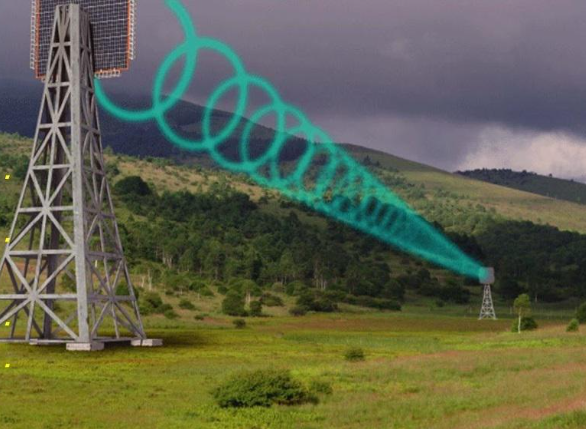
AEIR to Debut Long-Range Wireless Energy Transfer System in Zurich on December 15
Lucerne, Switzerland — AEIR announced today that it will conduct the first public demonstration of its long-range Wireless Energy Transfer (WET) system in Zurich on December 15, 2025. The debut marks a major milestone for the Swiss-based company, which has spent several years developing a technology capable of transmitting power safely and efficiently over hundreds of meters—without cables, plugs, or physical contact.
At the event, AEIR is also expected to announce a landmark licensing agreement with NATO, signaling strong institutional confidence in the technology’s potential. Industry experts note that long-range, cable-free power delivery could reshape sectors from electric mobility to medical devices by enabling real-time charging, continuous operation of remote sensors, and maintenance-free power delivery in both urban and remote settings.
AEIR’s system uses advanced photonics to wirelessly transmit energy over distances ranging from 200 to 500 meters. Operating on a regulated spectrum similar to that used by mobile networks, the technology meets stringent safety standards suitable for public, residential, and industrial environments. Unlike traditional directional energy systems, AEIR’s platform distributes power non-directionally, allowing multiple devices within range to be powered simultaneously without precise alignment.
During the Zurich demonstration, guests will observe wireless energy transfer across a 50-square-meter area, showcasing how phones, sensors, tools, and other devices can remain continuously powered within the coverage zone.
According to the company, its goal is to eliminate reliance on wiring and batteries across industries including automotive, logistics, hospitality, and smart infrastructure—offering a scalable, sustainable alternative that could redefine energy access in a truly wireless world.
Comments
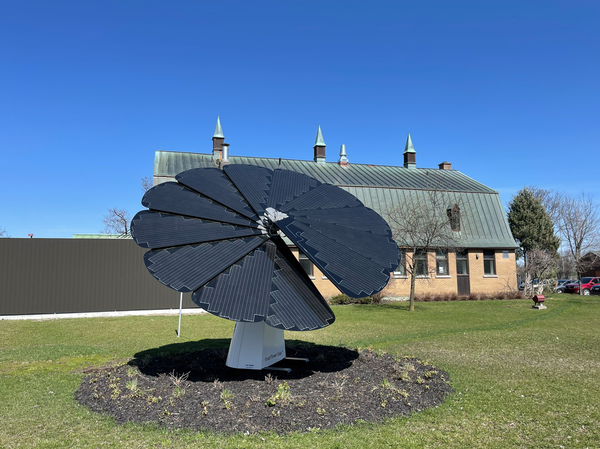
WattByWatt Uses Next-Generation Solar Materials to Power the World One Watt at a Time
As connected devices multiply and demand for clean electricity grows, the limitations of conventional solar technology are becoming more apparent. Traditional silicon panels are efficient at scale, but they are often rigid, energy-intensive to manufacture, and poorly suited for low-power or indoor applications. WattByWatt, a Canadian clean energy company, is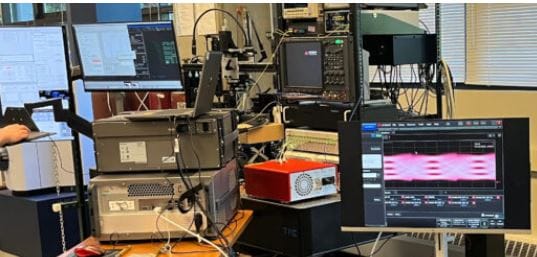
NLM Photonics’ vision is to substantially reduce the power consumption and footprint of high-performance data-centre and AI-training infrastructures by shifting from purely electronic to hybrid photonic-electronic interconnects
Seattle — NLM Photonics, is a Seattle-based startup developing next-generation hybrid organic electro-optic (OEO) photonic modulators At its core, NLM Photonics’ vision is to substantially reduce the power consumption and footprint of high-performance data-centre and AI-training infrastructures by shifting from purely electronic to hybrid photonic-electronic interconnects. The company’s patented Selerion
Stanford University research: a new kind of rechargeable battery that could hold far more energy than today’s standard lithium-ion cells.
A new battery startup emerging from Stanford University research, Energia Power Systems, is drawing attention for what it calls a breakthrough in the science of energy storage. At the heart of Energia’s pitch is a new kind of rechargeable battery that could hold far more energy than today’s
WattByWatt Uses Next-Generation Solar Materials to Power the World One Watt at a Time
As connected devices multiply and demand for clean electricity grows, the limitations of conventional solar technology are becoming more apparent. Traditional silicon panels are efficient at scale, but they are often rigid, energy-intensive to manufacture, and poorly suited for low-power or indoor applications. WattByWatt, a Canadian clean energy company, is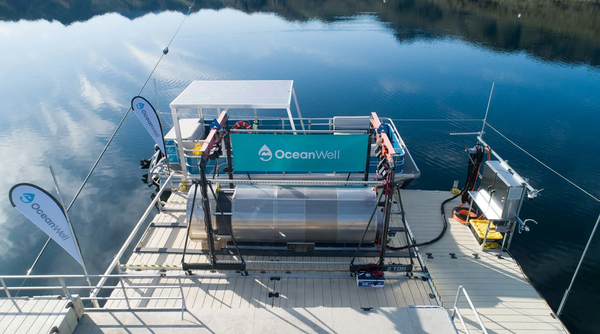
OceanWell Taps Deep Ocean to Redefine Sustainable Desalination
Water scarcity is rapidly becoming one of the most pressing global challenges, driven by climate change, population growth, and declining freshwater reserves. While desalination has long been seen as part of the solution, conventional systems remain energy-intensive, land-heavy, and environmentally controversial. OceanWell is advancing a new approach that rethinks how
Revolutionizing Water Management: How Technology is Tackling Water Waste in Buildings.
Shayp client ING went live in 2022 and has already saved over 3 million litres per year. In a couple of months, they were able to avoid 473 kg of carbon emissions by just monitoring their water and taking action efficiently.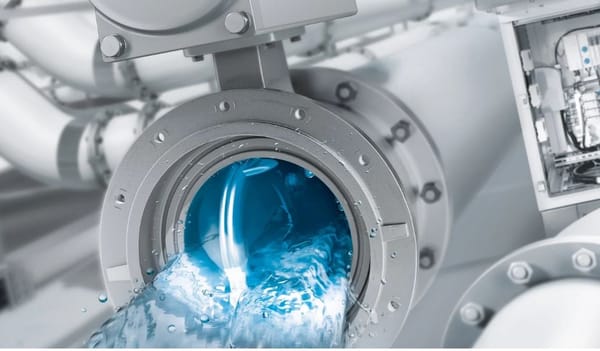
New Ecosystem Resource Directory Launched to Support Water Technology Companies Worldwide
A new Ecosystem Resource Directory is being developed to support water technology companies working to scale breakthrough innovations and proven solutions across the global water sector. The initiative aims to create a comprehensive, practical inventory of resources available to companies navigating the complex journey from innovation to market scale. By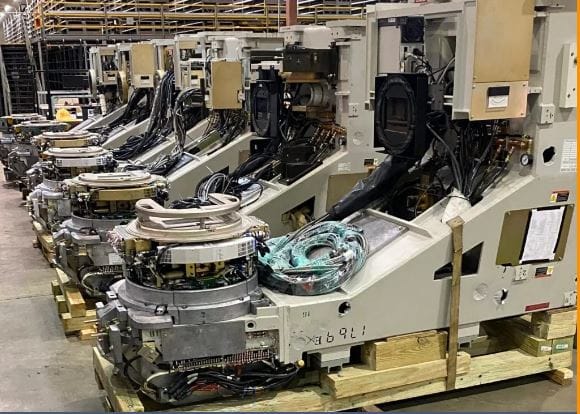
Pulse Industries to Build First Mass-Production Facility for Industrial Linear Accelerators which can be applied to water treatment systems capable of destroying ‘forever’ chemicals.
MARIANNA, FL – Pulse Industries will establish a 278,000-square-foot advanced manufacturing facility at the Marianna Airport Industrial Park, marking a transformative milestone in the mass production of linear accelerator systems. This initiative will create hundreds of skilled jobs and profoundly expand the accessibility of electron beam technology for diverse global