OceanWell Taps Deep Ocean to Redefine Sustainable Desalination
Water scarcity is rapidly becoming one of the most pressing global challenges, driven by climate change, population growth, and declining freshwater reserves. While desalination has long been seen as part of the solution, conventional systems remain energy-intensive, land-heavy, and environmentally controversial. OceanWell is advancing a new approach that rethinks how and where desalination happens — by moving it offshore and deep beneath the ocean’s surface.
Rethinking Desalination from the Seafloor Up
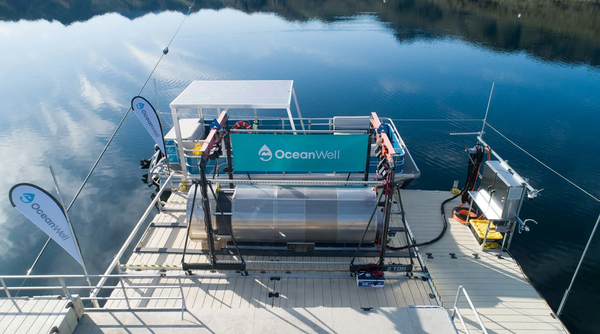
Founded in California, OceanWell has developed a deep-sea, modular desalination system designed to operate hundreds of meters below the ocean surface. Instead of pumping seawater to land and forcing it through membranes using large amounts of electricity, OceanWell leverages natural hydrostatic pressure at depth to drive reverse osmosis. This design reduces the energy required for desalination by up to 40% compared to conventional coastal plants. The result is a system that delivers fresh water more efficiently while avoiding many of the environmental trade-offs that have limited traditional desalination projects.
Water Farms: Modular, Scalable, and Offshore
OceanWell’s technology is deployed through subsea units known as Water Farms — modular pods that can be installed offshore and scaled incrementally as demand grows. Each pod is capable of producing millions of gallons of potable water per day, allowing utilities to expand capacity without building large coastal facilities or competing for valuable shoreline land. Because the systems operate offshore, they also reduce visual impact, noise, and land-use conflicts, making them particularly attractive for densely populated or environmentally sensitive coastal regions.
Designed with Marine Protection in Mind
Environmental impact has been a central design consideration. OceanWell’s LifeSafe™ intake system minimizes interaction with marine organisms, while brine by-products are released at depth where strong currents enable rapid dilution. By operating below biologically dense surface layers, the system avoids many of the tecological risks associated with near-shore desalination discharges.
From Pilot Projects to Global Potential
In California, the company is partnering with regional water agencies on California Water Farm 1, a planned offshore project expected to deliver up to 60 million gallons of freshwater per day by 2030. The initiative reflects growing interest from utilities seeking climate-resilient water supplies that align with long-term sustainability goals
Learn more about the company’s technology on the Davos Technology Platform.
Comments

Revolutionizing Water Management: How Technology is Tackling Water Waste in Buildings.
Shayp client ING went live in 2022 and has already saved over 3 million litres per year. In a couple of months, they were able to avoid 473 kg of carbon emissions by just monitoring their water and taking action efficiently.
New Ecosystem Resource Directory Launched to Support Water Technology Companies Worldwide
A new Ecosystem Resource Directory is being developed to support water technology companies working to scale breakthrough innovations and proven solutions across the global water sector. The initiative aims to create a comprehensive, practical inventory of resources available to companies navigating the complex journey from innovation to market scale. By
Altru Research initiates coverage on water creation firm Ahbstra Engineering which uses metal organic frameworks (MOFs) to create potable water from air.
NEW YORK – Altru Research announced it will begin coverage of Abhstra Engineering, a London based early-stage company developing a new approach to atmospheric water generation (AWG). The company’s major innovation was to recognize the potential of MOFs. Metal Organic Frameworks a significant discovery in the material sciences that emerged
Revolutionizing Water Management: How Technology is Tackling Water Waste in Buildings.
Shayp client ING went live in 2022 and has already saved over 3 million litres per year. In a couple of months, they were able to avoid 473 kg of carbon emissions by just monitoring their water and taking action efficiently.
New Ecosystem Resource Directory Launched to Support Water Technology Companies Worldwide
A new Ecosystem Resource Directory is being developed to support water technology companies working to scale breakthrough innovations and proven solutions across the global water sector. The initiative aims to create a comprehensive, practical inventory of resources available to companies navigating the complex journey from innovation to market scale. By
Pulse Industries to Build First Mass-Production Facility for Industrial Linear Accelerators which can be applied to water treatment systems capable of destroying ‘forever’ chemicals.
MARIANNA, FL – Pulse Industries will establish a 278,000-square-foot advanced manufacturing facility at the Marianna Airport Industrial Park, marking a transformative milestone in the mass production of linear accelerator systems. This initiative will create hundreds of skilled jobs and profoundly expand the accessibility of electron beam technology for diverse global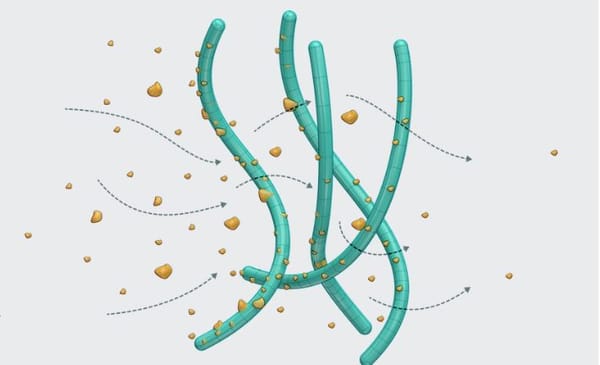
Pilot success at Atlantic County Utilities Authority (ACUA) paves way for full-scale deployment of PolyGone Systems micro-plastic removal technology
Atlantic City, NJ — November 8, 2025 — A year after the grand unveiling of the micro-plastic removal pilot at ACUA’s wastewater treatment facility, the partnership between PolyGone Systems and ACUA is now transitioning into a full-scale implementation phase — marking a significant milestone in the fight against micro-plastic pollution in treated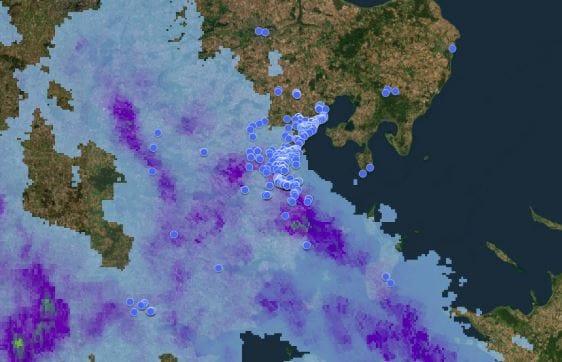
Dryp Unveils “Lens” Platform to Unite Utility Data Streams. Integration of diverse data streams from utilities into a unified interface can result in 90% reduction in data analysis time.
Copenhagen, Denmark — November 8, 2025 — Danish cleantech firm Dryp A/S today announced the launch of “Lens”, a new hydraulic-data visualisation and analytics platform designed to integrate diverse data streams from utilities into a unified interface. Utilities amass vast volumes of information — from SCADA pump readings and GIS maps, to